Case study / xTide
One workspace for the work behind service.
A venue operations platform connecting tip distribution, supplier ordering, and staff scheduling.
01 / The problem
The workflow behind the request.
A venue’s end-of-day work cuts across several systems: pooled tips, supplier orders, staff availability, and the next schedule. Each separate handoff creates another place for information to be re-entered or missed.
02 / What I built
Connect the complete path.
I built a shared application around three operational modules: TipTide for configurable tip distribution, StockTide for supplier ordering and inventory, and ShiftTide for scheduling and availability. The implementation connects a Next.js interface to Firebase identity and Firestore data, with email and push notifications and Capacitor mobile shells.
03 / Engineering decision
A tradeoff that shaped the system.
Keep a shared account and venue context across the modules, while giving each workflow its own rules. This makes navigation simpler, but also means role and venue checks must stay consistent as staff move between tools.
The scheduling implementation looks up shifts within their venue path. Notification services similarly scope recipient lookup to the tenant. Those boundaries matter more than simply hiding a manager’s button from a staff screen.
04 / Result & evidence
What the implementation enables.
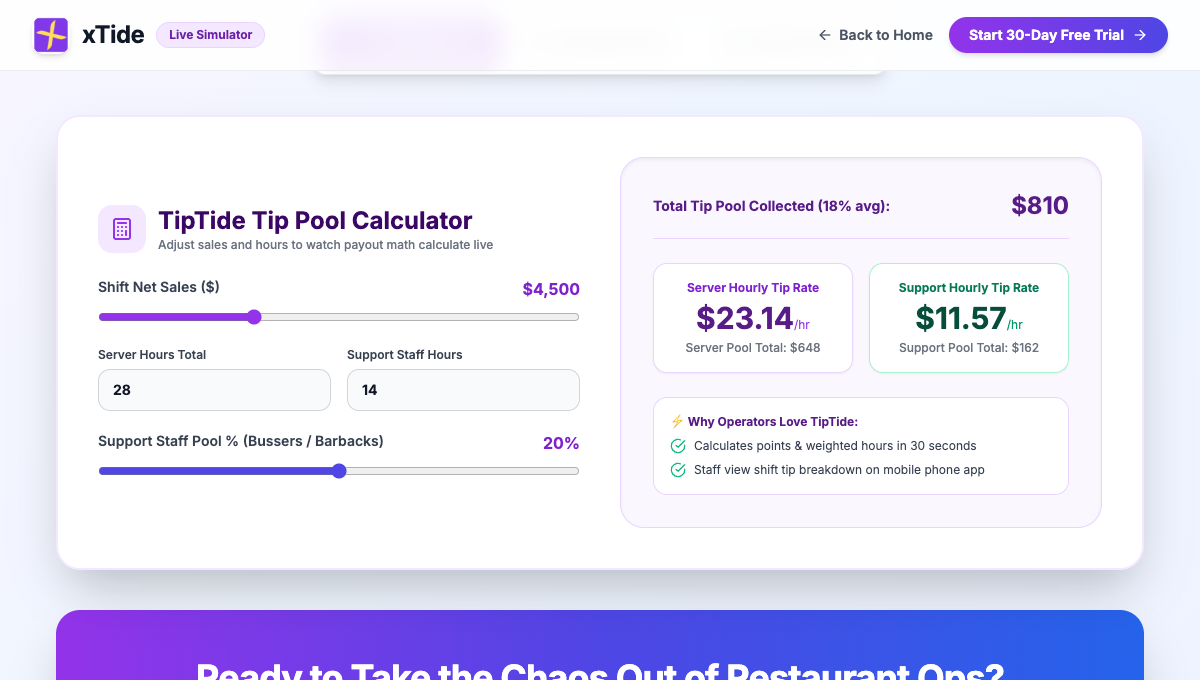
The result is a connected product with a public simulator for exploring tip calculations, supplier-order splitting, and labour planning. A recruiter can inspect these examples without accessing a customer’s account.
Evidence and scope
The repository includes tenant-aware scheduling helpers and notification services. The public simulator was opened for this case study. It demonstrates example calculations, not a live customer’s payroll, purchasing, or scheduling data.
05 / What I learned
The lesson I take into the next build.
A working calculation is only one part of operational software. The larger implementation challenge is keeping identity, permissions, and the handoff to the next person consistent.